Deendayal Upadhyay Bhoomiheen Krishi Mazdoor Kalyan Yojana: Chief Minister Shri
Vishnu Deo Sai to Disburse ₹500 Crore to Nearly 5 Lakh Landless Labour Families
Increasing Income and Ensuring Financial Stability for Landless Labourers is our Focus: Shri Sai
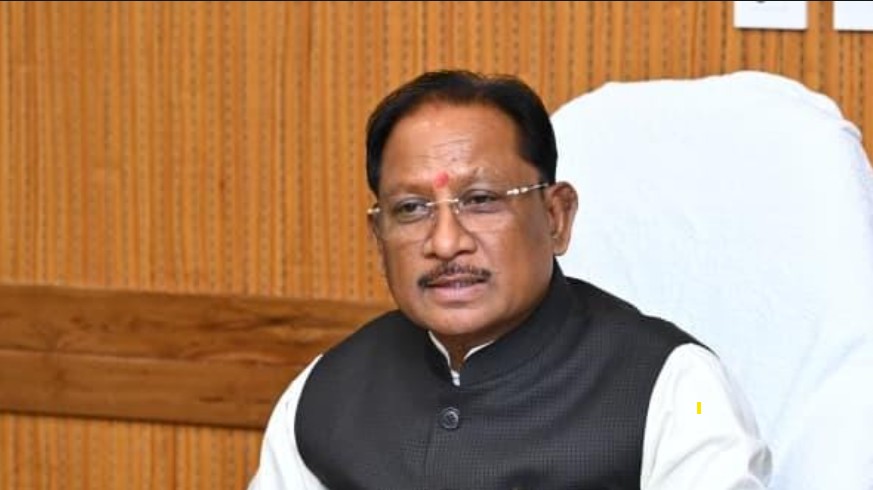
Raipur, 24 March 2026// Chief Minister Shri Vishnu Deo Sai will transfer ₹500 crore to nearly five lakh landless agricultural labour families on 25 March from Balodabazar under the Deendayal Upadhyay Bhoomiheen Krishi Mazdoor Kalyan Yojana, which aims to strengthen livelihoods and provide financial stability.
The highest number of beneficiaries are from Raipur district with 53,338 landless agricultural labourers, followed by 39,401 in Bilaspur and 37,011 in Mahasamund. By bringing these families into the mainstream, the government has strengthened its commitment to prioritising those at the very end of the social and economic spectrum—’Antyodaya’.
Under the scheme, a total provision of ₹495 crore 96 lakh 50 thousand has been made for more than 4.95 lakh eligible families. Each landless agricultural labour family receives financial assistance of ₹10,000 per year, transferred directly into their bank accounts.
As per the Chief Minister’s announcement, annual assistance of ₹10,000 will continue to be provided to landless agricultural labourers. In the SANKALP Budget 2026–27, a provision of ₹600 crore has been made to strengthen financial security for these families. The support is expected to help meet essential needs such as education, healthcare, and daily expenses without dependence on loans.
Chief Minister said the objective of launching the scheme is to increase the net income of landless agricultural labour families and provide them with financial stability. The scheme also covers landless families associated with forest produce collection, as well as traditional occupations (pauni-pasri arrangements) such as shepherds, carpenters, blacksmiths, cobblers, barbers, and washermen. In scheduled areas, it includes tribal families engaged in religious practices at local shrines, such as priests, Baiga, Gunia, and Manjhi communities. The beneficiary list also includes 22,028 Baiga and Gunia families, who play a key role in preserving the state’s cultural traditions. The government has increased the annual assistance from ₹7,000 to ₹10,000 per family, with the amount being transferred directly to beneficiaries’ bank accounts.